Tuesday, August 28, 2007

Risks of a fire

The primary risk to people in a fire is smoke inhalation (breathing in smoke); most of those killed in fires die from this, not from burns. The risks of smoke include: suffocation due to the fire consuming or displacing all the oxygen from the air, poisonous gases produced by the fire, or aspirating heated smoke that can burn the inside of the lungs.
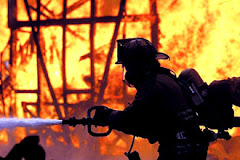
As an example, plastics inside a car can generate 200,000 m3 of smoke at a rate of 20-30 m3/sec. Thus a small amount of plastic, when burning, can give off a large amount of smoke. Firefighters carry self-contained breathing apparatus (SCBA) (an open-circuit positive pressure compressed air system) to prevent smoke inhalation.
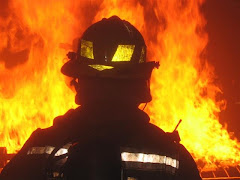
There are several risks stem from the presence of heat. the most obvious bring burns. Even without direct contact with the flames, there are a number of comparably serious risks: burns from radiated heat, contact with a hot object, hot gases (e.g., air), steam and hot and/or toxic smoke. Firefighters are equipped with personal protective equipment (PPE) that includes fire-resistant clothing (nomex or polybenzimidazole fiber (PBI)) and helmets that limit the transmission of heat towards the body.
Heat causes human skin to burn causing severe medical problems. Depending upon the heat of the fire, burns can occur in a fraction of a second. A first degree burn (on the skin surface) is extremely painful. A second degree burn is a burn into the skin, and can cause shock, infections, and dehydration and if left untreated often results in death. Second degree burns compromise nerve tissue and are not painful. Third degree burns leave muscles and internal organs exposed from completely destroyed skin. If the person survives the shock and exposure to germs, medical treatment is extremely difficult.
There are other risks for firefighters as well:
Vision can be obscured by the smoke: a person inside the building may not be able to see, can fall, or become disoriented and lost; a firefighter can become trapped and killed by the smoke or fire, the building can collapse on its occupants. The heat can make pressurised gas cylinders and tanks explode, producing what is called a BLEVE (Boiling Liquid Expanding Vapor Explosion). Some chemical products such as ammonium nitrate fertilizers can also explode. Explosions can cause physical trauma or potentially serious blast or shrapnel injuries. Still with all these risk there are continued improvements to firefighting equipment every year. Keeping firefighters safer and helping us do our job better. So next time you see a firefighter make sure you tell him thank you for what he does.


Next up: Suppressing the fuel and the energy


wikipedia.org

Firefighting

Firefighting is the act extinguishing destructive fires. A firefighter fights these fires and prevents destruction of life, property and the environment. Firefighting is a highly technical profession which requires years of training and education in order to become proficient.
Historically, physicists created a graphical representation detailing the three elements of fire (fire triangle). In recent years, one more point has been added, creating the fire tetrahedron. The four elements needed to sustain combustion are:
fuel, oxidizer, heat and a chemical chain reaction.
To extinguish a fire, it is necessary to remove one or more of the three components of combustion. Removing any of these will not allow combustion to continue. Firefighters work by
limiting exposure of fuel that may be ignited by nearby flames or radiant heat,
containing and extinguishing the fire, removing debris, and extinguishing all hidden fires to prevent rekindling
Firefighters' goals are to save life, property and the environment. A fire can rapidly spread and endanger many lives; however, with modern firefighting techniques, catastrophe is usually avoided. To prevent fires from starting a firefighter's duties include public education and conducting fire inspections. Because firefighters are often the first responders to people in critical conditions, firefighters provide basic life support as emergency medical technicians or advanced life support as licensed paramedics.


Next up: Risks of a fire


wikipedia.org

Thanks for waiting

A big thanks to all my viewers for waiting patiently. Enjoy the new series and of course any comments are appreciated!

Wednesday, August 15, 2007

A momentary pause

I will be staring a new series soon. Any ideas or request are welcome.
Stay tuned!

Thursday, August 9, 2007

Property

Buildings that are made of flammable materials such as wood are different from so called "fire-resistant" buildings such as concrete high-rises. Generally, a "fire-resistant" building is designed to limit fire to a small area or floor. Other floors can be safe simply by preventing smoke inhalation and damage. All buildings suspected of being on fire must be evacuated, regardless of fire rating.
While sometimes fires can be limited to small areas of a structure, wider collateral damage due to smoke, water, and burning embers is common. Utility shutoff (such as gas and electricity) is typically an early priority of arriving fire crews. Furthermore, fire prevention can take on a special meaning for property where hazardous materials are being used or stored.
Some fire fighting tactics may appear to be destructive, but often serve specific needs. For example, during "ventilation" firefighters are often forced to open holes in the roof or floors of a structure (called "vertical ventilation") or open windows or walls (called "horizontal ventilation") to remove smoke and heated gases from the interior of the structure. Such ventilation methods are also used to locate victims quicker as visibility increases and to help preserve the life of trapped or unconscious individuals due to the poisonous gases inside of the structure. Vertical Ventilation is absolutely vital to firefighter safety in the event of a Flashover or Backdraft senario. Releasing the flammable gasses through the roof often eliminates the possibility of a backdraft and by the removal of heat the possibility of a flashover is reduced significantly. Flashovers, due to their intense heat (900 - 1200 degrees fahrenheit) and explosive temperaments are almost always fatal to firefighter personnel. Precautionary methods, such as busting a window out, often reveal backdraft situations before the firefighter enters the structure and is met with the circumstance head-on. Firefighter safety is the number one priority.
Whenever possible, movable property is moved into the middle of a room and covered with a heavy cloth tarp (a "salvage cover"). Other steps may be taken to divert or remove fire flow runoff (thus salvaging property by avoiding unnecessary damage), retrieving/protecting valuables found during suppression or overhaul, and boarding windows, roofs and doors against the elements and looters.


wikipedia.org

Communication and Command structure

The expedient and accurate handling of fire alarms or calls are significant factors in the successful outcome of any incident. Fire Department communications play a critical role in that successful outcome. Fire Department communications include the methods by which the public can notify the communications center of an emergency, the methods by which the center can notify the proper fire fighting forces, and the methods by which information is exchanged at the scene.
A Telecommunicator (often referred to as a Dispatcher)has a role different but just as important as other emergency personnel. The telecommunicator must process calls from unknown and unseen individuals, usually calling under stressful conditions. He/She must be able to obtain complete, reliable information from the caller and prioritize requests for assistance. It is the dispatchers responsibility to bring order to chaos.
While some Fire Departments are large enough to utilize their own telecommunication dispatcher, most rural and small areas rely on a central dispatcher to provide handling of Fire, Rescue and Police services.
Firefighters are trained to use communications equipment to receive alarms, give and receive commands, request assistance, and report on conditions. Since firefighters from different agencies routinely provide mutual aid to each other, and routinely operate at incidents where other emergency services are present, it is essential to have structures in place to establish a unified chain of command, and share information between agencies. All radio communication in the United States is under authorization from the Federal Communications Commission(FCC), as such, fire departments that operate radio equipment must hold radio licenses from the FCC.
Ten codes were popular in the early days of radio equipment because of poor transmission and reception. Advances in modern radio technology have reduced the need for ten-codes and many departments have converted to simple English.

The U.S. Federal Emergency Management Agency has established a National Incident Management System. One component of this system is the Incident Command System. The Incident Command System or ICS determines who is in charge and sets standards for command structure. This ensues that there will always be some one in charge, and no mater how big the incident becomes there will still be uniform command and accountability.


Next up: Property


wikipedia.org

Rescue

Rescue operations consist of searching for and removing trapped occupants of hazardous conditions. Animals may also be recovered, if resources and conditions permit. Generally triage and first aid are performed outside, as removal from the hazardous atmosphere is the primary goal in preserving life. Search patterns include movement against room walls (to prevent rescuers from becoming lost or disoriented) and methodical searches of specific areas by designated teams. Unlike a fire control team, a rescue team typically moves faster, but has no hose to follow out to safety through the smoky darkness. A rescue rope may be needed for tethering a team involved in exceptionally dangerous conditions.
Incident commanders also arrange for standby search and rescue teams to assist if firefighters become lost, trapped, or injured. Such teams are commonly, and often interchangeably, known as Rapid Intervention Teams (RIT), or Firefighter Assist and Search Teams (FAST). According to "two-in, two-out", the only time it is permissible for a team of firefighters to enter a burning structure without backup in place outside is when they are operating in what is known as "Rescue Mode". Rescue Mode occurs when firefighters have arrived at the scene, and it is readily apparent that there are occupants trapped inside who need immediate rescue. At such a time, properly equipped firefighters (exercising good judgment tempered by training and experience) may enter the structure and proceed directly to victims in need of rescue, RIT will then be put in place when resources permit.
Searches for trapped victims are exhaustively detailed, often including searches of cupboards, closets, and under beds. The search is divided into two stages, the primary and secondary. The primary search is conducted quickly and thoroughly, typically beginning in the area closest to the fire as it is subjected to the highest risk of exposure. The secondary search only begins once the fire is under control, and is always (resources and personnel permitting) performed by a different team from that which did the primary search.
Rescue operations may also involve the extrication of victims of motor vehicle crashes (abbreviated MVC). Firefighters use spreaders, cutters, and hydraulic rams, collectively called hydraulic rescue tools -- known better to the public as Jaws of Life -- to remove metal from the patient, followed by actually removing the patient, usually on a backboard with collar, and transferring to a waiting ambulance crew in the cold zone. More technical forms of rescue include subsets such as rope rescue, swiftwater rescue, confined space rescue, and trench rescue. These types of rescue are often extremely hazardous and physically demanding. They also require extensive technical training. NFPA regulation 1006 and 1670 state that a "rescuer" must have medical training to perform any technical rescue operation. Accordingly, firefighters involved in rescue operations have some kind of medical training as first responders, emergency medical technicians, paramedics or nurses.


Next up: Communication and Command structure


wikipedia.org